Apr 25, 2024
Black alder planting is gaining popularity
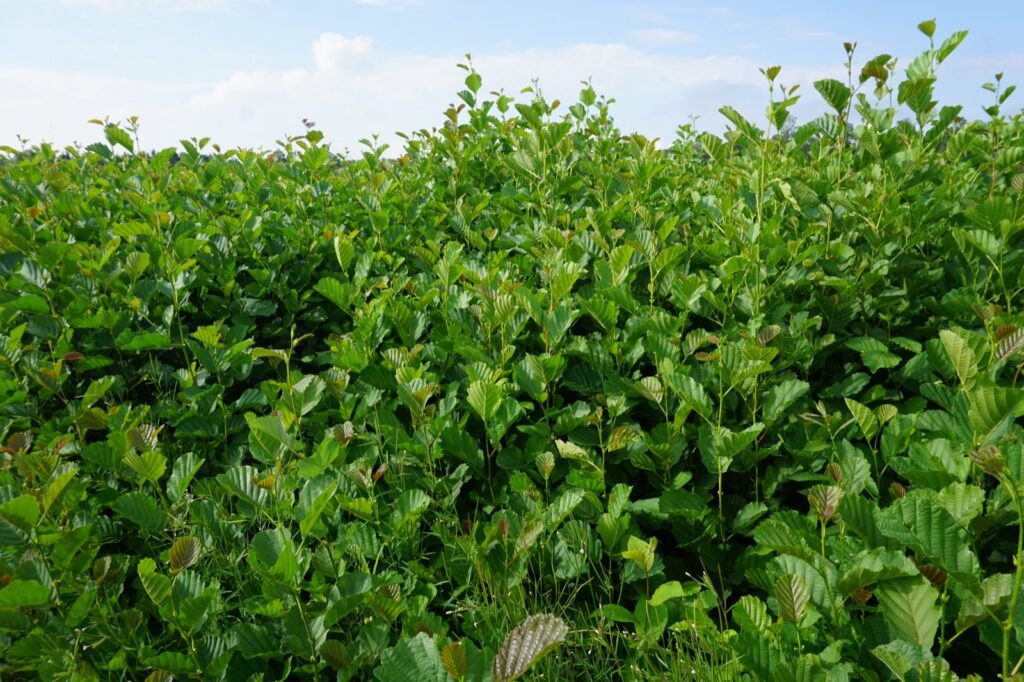
When planting forests, we usually focus mainly on spruce, birch and pine, but in recent years black alder (common alder, Latin name Alnus glutinosa) has also entered the picture and secured its place. This tree species, which we are used to seeing growing alongside others in mixed stands, is becoming increasingly popular among cultivated plants as well.
Why is that?
One of the main reasons for the growing popularity of black alder is the fast growth of this broadleaf tree and, as a result, the fact that it reaches felling age earlier than other commonly planted tree species. In addition to its fast growth, it is light-demanding, so it adapts well to clear-cuts and other open areas. Years of research have shown the management of black alder stands to be a prerequisite for sustainable forest management, and as early as 2001, Aivo Vares, chief seed management specialist at RMK, confirmed the high productivity of planted black alder stands in his research.
Although black alder regenerates naturally, planting is still preferred because the quality of nursery-grown plants is better. Trees that grow naturally from seed or stump sprouts often suffer from rot, crooked stems and a lot of branchiness.
Uses of black alder in industry and elsewhere
Black alder surpasses its relative, grey alder, in many areas of use. The wood of black (common) alder is light, soft and brittle, but surprisingly easy to work. It is excellent for plywood production, furniture making and carving. When dried, black alder wood takes on a beautiful pinkish tone.
Alder logs are also valued as firewood in households, but also in the food industry: black alder wood is widely used for smoking meat and fish in the canning industry, as it gives the product a beautiful golden-yellow colour and sheen, as well as a good flavour.
A valued tree species for land reclamation and protecting natural areas
Black alder has also proven promising, for example, in the reclamation of oil shale quarries or the afforestation of periodically waterlogged agricultural land (hayfields and pastures), where the growth of other tree species may be limited.
Black alder stands are also well suited for creating natural buffer zones or reinforcing the banks of water bodies, which, in addition to adding value, also offers an aesthetic view.
Rising demand has brought sellers to the market
Estonian forest tree growers have also started to meet the demand and grow seedlings. Eesti Taimekasvatus, located in the village of Suure-Rakke, offers high-quality 1-year-old black alders of Estonian origin, which are ideally planted in the spring season in April–May or in the autumn season in September–October.